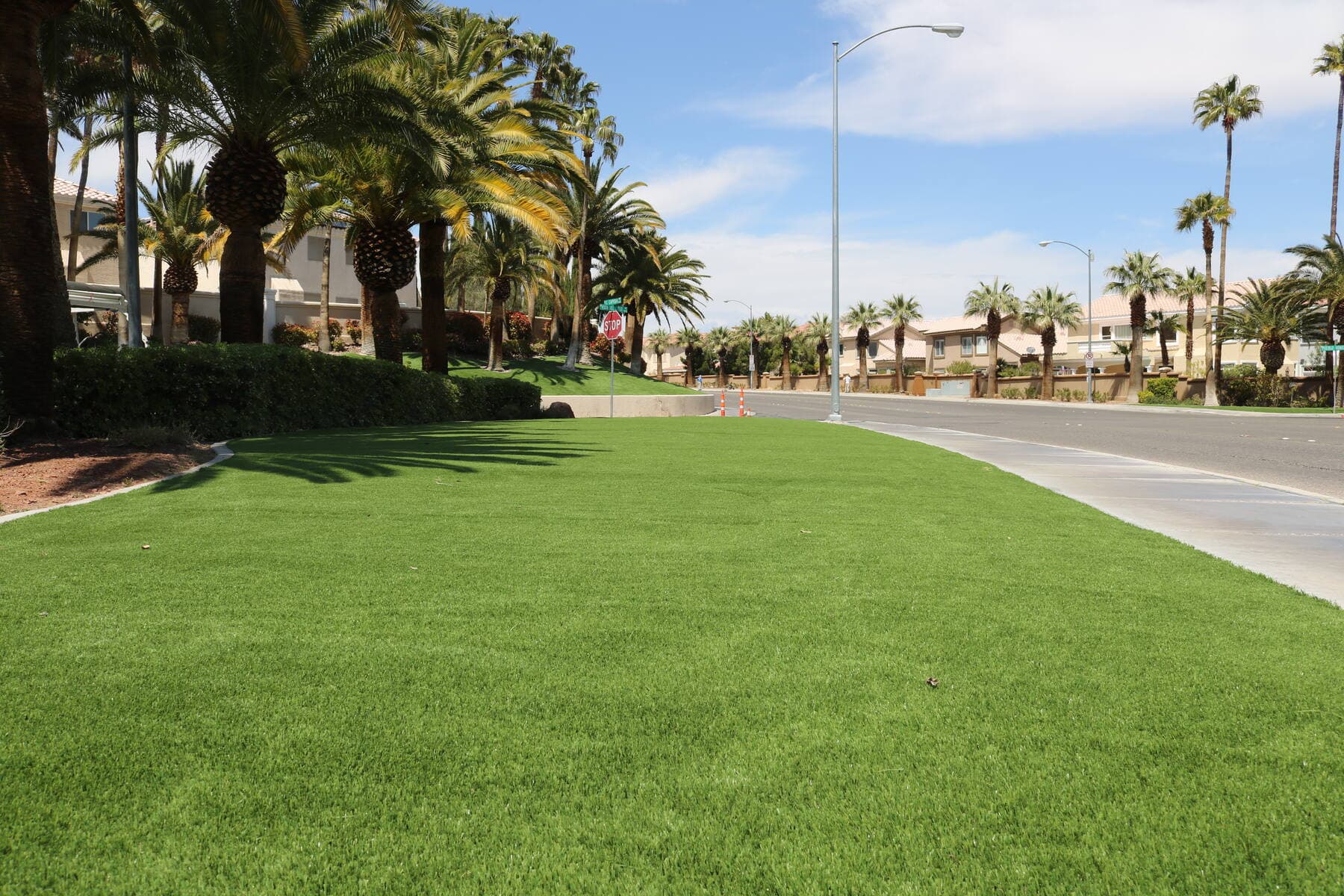
How synthetic turf and natural grass really perform under Mojave sun, and what to weigh before choosing one for your yard.
This is one of the most common questions we get asked on a walkthrough: turf or grass? There's no universal right answer. It depends on your budget, how you use the yard, and how much time you want to spend on maintenance. What we can do is lay out how each one actually performs in Las Vegas conditions, because a lot of the generic advice out there is written for climates that don't see our kind of heat.
Why This Question Comes Up So Often in Las Vegas
Natural grass in the desert is a maintenance commitment. Between the heat, the sun exposure, and the water restrictions that come with living in a desert community served by SNWA, keeping a natural lawn healthy year-round takes more attention here than it does in a lot of the country. That's part of why artificial turf has become such a common sight in Las Vegas Valley yards, but it's not automatically the right call for every property.
The Case for Natural Grass
Natural grass still has real advantages: it's cooler underfoot in the shade, it has a look and feel that some homeowners simply prefer, and it supports a more traditional landscape aesthetic. Warm-season grasses suited to our climate can handle the heat reasonably well when properly irrigated, mowed at the right height, and maintained on a consistent schedule. If you have kids or pets who spend a lot of time on the lawn, or you just like mowing on a Saturday morning, natural grass remains a legitimate option, as long as you go in clear-eyed about the water and upkeep it requires.
The Case for Artificial Turf
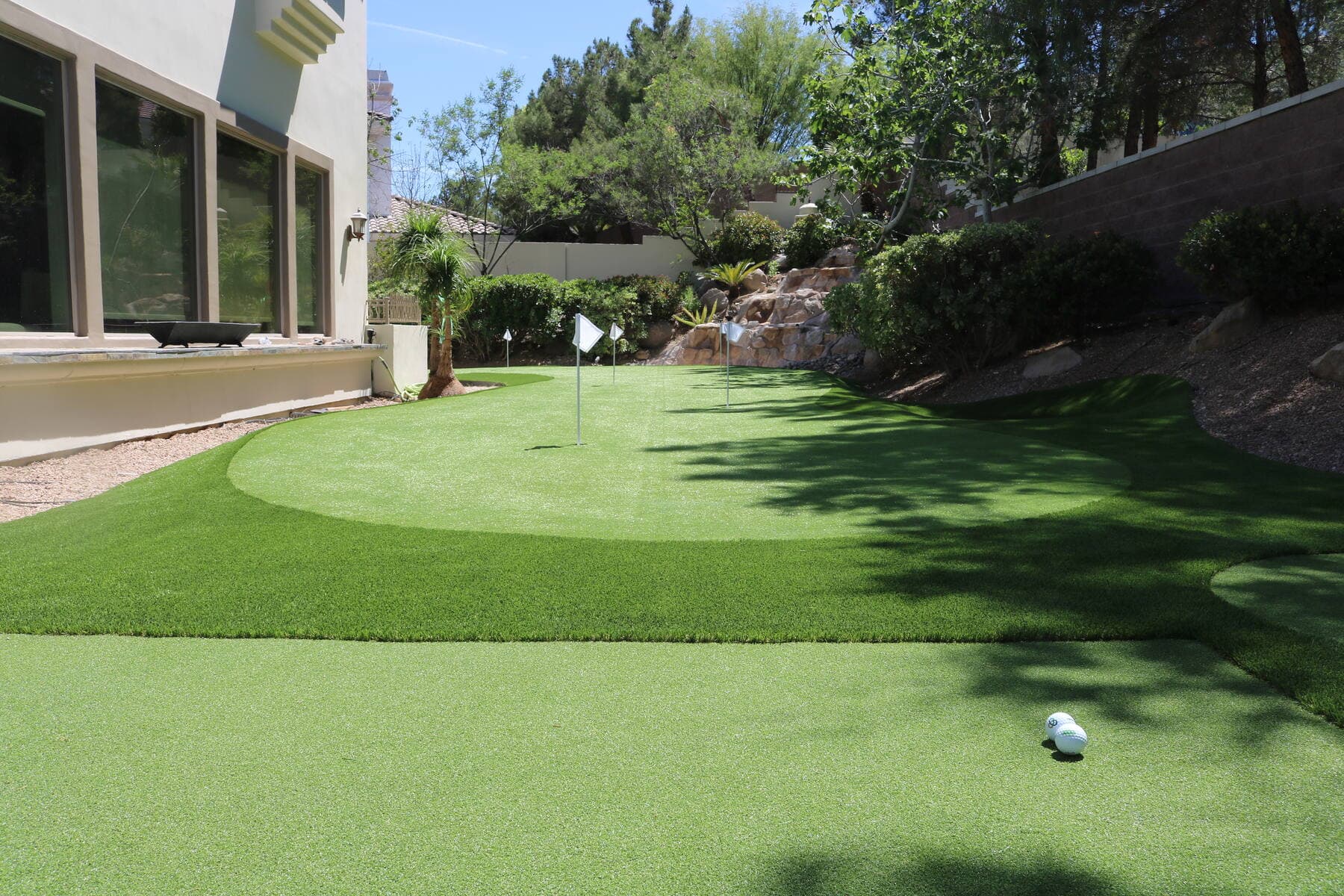
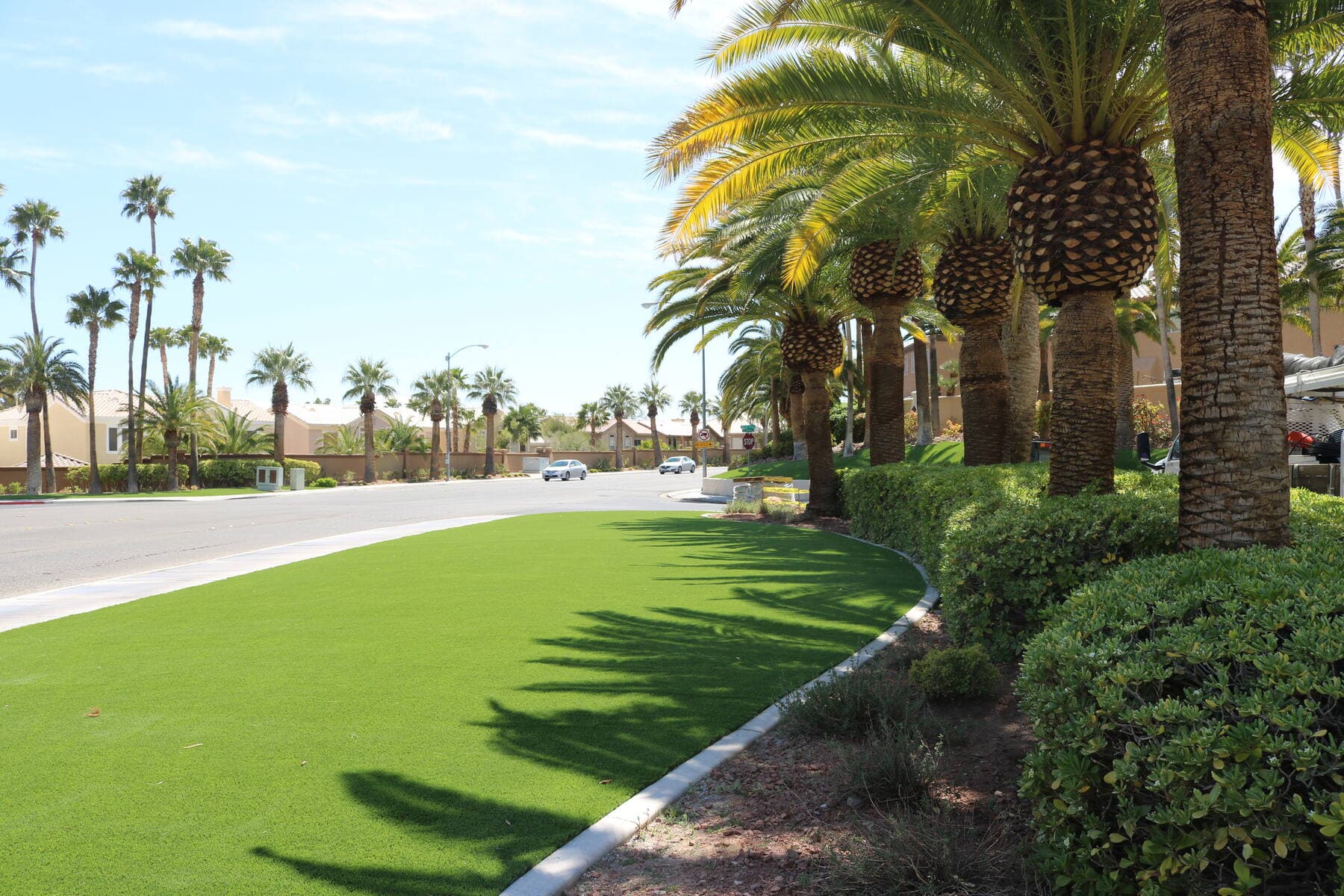
Artificial turf's biggest draw in the desert is consistency: it looks green in August the same way it looks green in January, without irrigation cycles, mowing, fertilizing, or overseeding. For homeowners looking to reduce water use, cut down on weekly maintenance, or convert a rarely-used strip of lawn into something low-maintenance, turf is often the more practical choice. It also holds up well in areas where foot traffic would wear natural grass thin.
Heat Performance: What Really Happens to Turf in July
The honest answer here is that artificial turf gets hot in direct summer sun, noticeably hotter than natural grass or even bare soil in some cases, especially in the mid-afternoon. Turf quality, backing material, and infill type all affect how much heat the surface holds, and placement matters too: turf in full, unshaded southern exposure will run hotter than turf that gets afternoon shade from a tree, wall, or structure. Anyone considering turf for a play area or a space where people or pets will be barefoot should factor this in and talk through placement and product options before installation, not after.
Base Prep Is the Difference Between a Good Lawn and a Bad One
This applies to both options, but it's especially true for turf. A synthetic lawn is only as good as the base underneath it: proper grading for drainage, a compacted aggregate base, and correct seaming and infill application are what separate turf that looks great for years from turf that ripples, drains poorly, or shows seams within a season. Natural grass depends just as heavily on proper soil prep, grading, and an irrigation system designed for the specific grass type and sun exposure of that yard. Skipping base prep to save money up front is the single most common reason either option fails early.
Longevity and Maintenance Realities
Quality artificial turf is built to hold up for years under proper installation and normal residential use, though exact lifespan depends on product quality, sun exposure, and traffic, so ask your installer about the specific product's expected performance rather than relying on a blanket number. Natural grass, by contrast, is an ongoing living system: it needs consistent mowing, seasonal overseeding in many cases, fertilization, aeration, and pest and weed management to stay healthy through a Las Vegas summer. Turf maintenance isn't zero (it still needs periodic brushing, rinsing, and debris removal), but it's a different kind of commitment than a living lawn.
Cost Considerations Over Time
Artificial turf typically costs more upfront than seeding or sodding a natural lawn, but natural grass carries ongoing costs in water, fertilizer, equipment, and labor that add up over the years it's in the ground. Which option comes out ahead financially depends on how long you plan to stay in the home, your local water rates, and how much of the maintenance you'd otherwise be paying someone else to do. It's worth running the numbers for your specific situation rather than assuming one option is automatically cheaper.
Which One Is Right for Your Yard
There's no single right answer for every property. A shaded backyard with kids playing on it daily has different needs than a rarely-used side yard baking in full sun. NLS Grounds Management has installed and maintained both natural lawns and synthetic turf across the Las Vegas Valley for more than 30 years, and we'll give you a straight assessment of what makes sense for your specific yard, not just whatever we happen to be selling that month. Reach out for a free estimate and we'll walk the property with you.
Thinking about a project?
NLS Grounds Management has designed, built, and maintained desert landscapes across the Las Vegas Valley for 30+ years. Free estimates, honest advice.