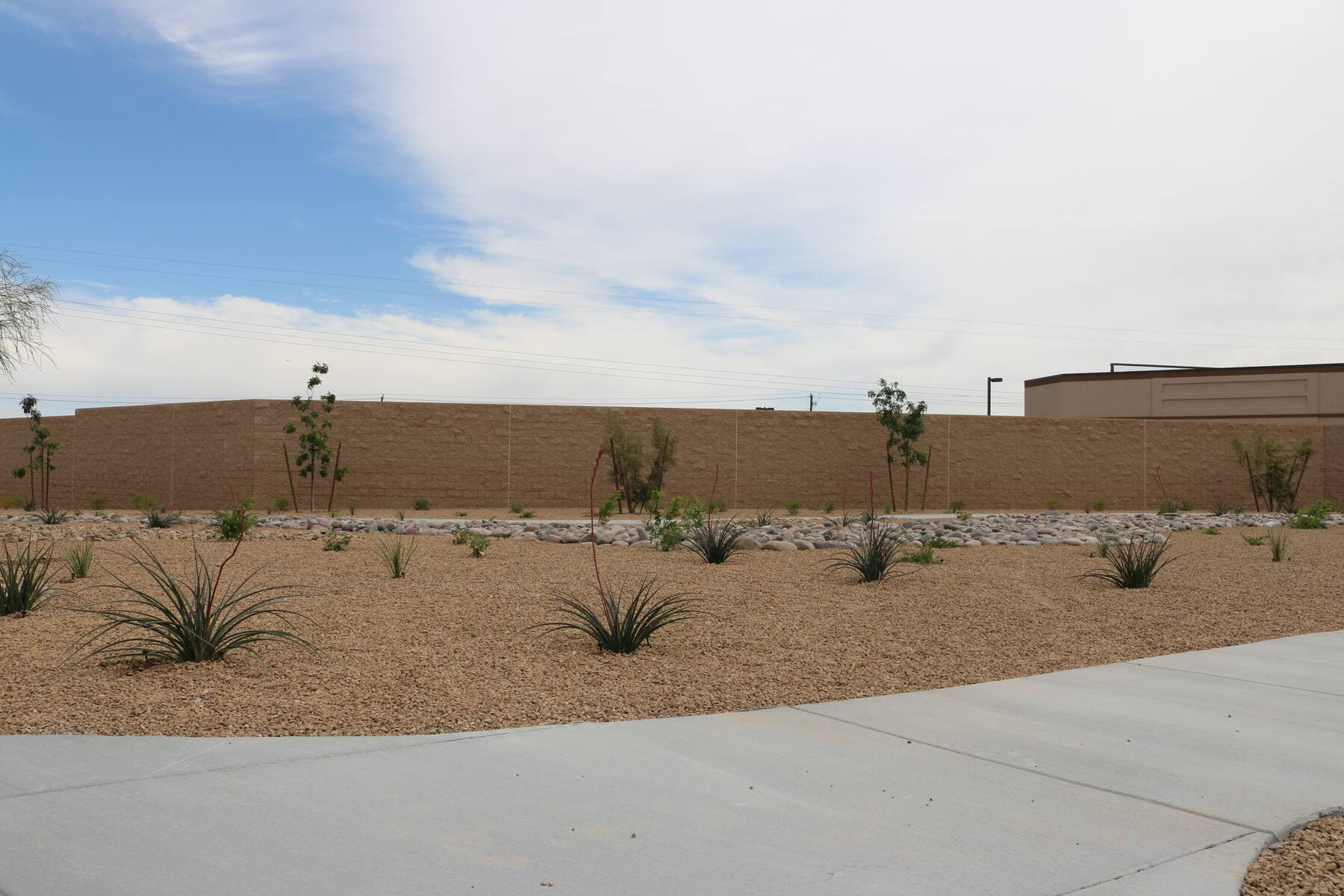
A practical guide to desert-adapted design that cuts water use without giving up curb appeal, built for Las Vegas Valley soil and climate.
If you've lived in the Las Vegas Valley for more than a summer, you already know the math doesn't work in favor of a thirsty, all-turf front yard. Between triple-digit heat for months at a stretch, low humidity, and a water supply that everyone in this valley has a stake in protecting, xeriscaping isn't a trend here. It's just smart design. At NLS Grounds Management, we've spent 30+ years building and maintaining landscapes across the valley, and the yards that hold up best over time are the ones designed around the desert, not in spite of it.
Why Xeriscaping Makes Sense in the Mojave Desert
Las Vegas sits in the Mojave Desert, which means intense summer heat, mild but real winter chill, wide swings between day and night temperatures, and a water supply drawn largely from the Colorado River system. None of that is going away. A landscape designed for a wetter, cooler climate will always be fighting the conditions instead of working with them: more irrigation, more stress on plants, more repair work when heat and sun damage things that were never suited for the desert in the first place.
What Xeriscaping Actually Means (More Than Rocks)
A lot of homeowners hear 'xeriscape' and picture a yard of gravel with a single cactus in the middle. That's not xeriscaping. That's just rock. Real xeriscape design uses a mix of desert-adapted trees, shrubs, groundcovers, and hardscape elements arranged so that every plant gets roughly the water it actually needs, no more and no less. Done well, a xeriscape yard has texture, color, shade, and seasonal interest. It just doesn't rely on turf and daily sprinkler runs to get there.
Designing in Hydrozones
One of the most important (and most overlooked) principles in water-wise design is hydrozoning: grouping plants by water need so you're not overwatering low-need plants to keep high-need plants alive nearby. A shade tree, a few flowering shrubs near a patio, and drought-tolerant groundcover further out might all sit in the same yard, but they don't belong on the same irrigation zone. When we design a xeriscape conversion, this is one of the first things we map out, because it's what actually drives water savings over the long run, not just the plant palette.
Soil Prep Matters More Than People Think
Valley soil tends to be alkaline, compacted, and low in organic matter, very different from the loamy soil most nursery plants were grown in. Dropping desert-adapted plants into unamended native soil without proper prep is one of the most common reasons a xeriscape installation struggles in its first year. Proper bed preparation, drainage correction, and, where appropriate, soil amendment give roots a fighting chance to establish before the first real heat wave hits.
Choosing the Right Ground Cover and Mulch
Decomposed granite, rock mulch, and organic mulch each have a place depending on the plants and the look you're going for. Mulch does double duty in the desert: it slows evaporation from the soil surface and moderates soil temperature, which matters when ground temperatures can get brutal in direct summer sun. The right mulch choice depends on your plant selection, your irrigation approach, and how the space gets used, which is why a one-size-fits-all rock yard often isn't the right call.
SNWA Rebates and Water-Smart Programs
The Southern Nevada Water Authority runs rebate and conversion programs for homeowners who replace grass with water-smart landscaping, along with resources on approved plant lists and program requirements. Because program details, eligible square footage, and incentive amounts change over time, we always point clients to SNWA directly (snwa.com) for current numbers rather than quoting figures that may be out of date. What we can help with is designing a conversion that meets program requirements and looks good doing it.
Common Xeriscape Mistakes We See
The most common issues we get called out to fix are overcrowded beds where plants were spaced for how they look at installation instead of at maturity, irrigation systems left running on a turf-era schedule after a conversion, and plant selections pulled from general 'drought tolerant' lists that weren't actually vetted for Mojave heat and alkaline soil. Xeriscaping done right is still a designed landscape. It just uses a different plant and water toolkit.
Getting Started
If you're converting an entire front yard or rethinking a few high-water zones, the best results come from a plan that accounts for your soil, sun exposure, and how you actually use the space. NLS Grounds Management is licensed, bonded, and insured, and we've been designing and maintaining desert landscapes across the Las Vegas Valley for more than 30 years. If you're thinking about a water-wise conversion, reach out for a free estimate and we'll walk your property with you before anything gets designed.
Thinking about a project?
NLS Grounds Management has designed, built, and maintained desert landscapes across the Las Vegas Valley for 30+ years. Free estimates, honest advice.